

Is Richard Strauss's An Alpine Symphony Nietzschean?
Listen to this article
Richard Strauss's An Alpine Symphony, Op. 64 (1915), is a single-movement symphony structured as a continuous narrative depicting an ascent of and descent from the Alps, divided into twenty-two distinct programmatic episodes. The journey begins with "Night," where a descending scale in B-flat minor evokes the dark and cold atmosphere before dawn, then transitions seamlessly into the radiant A-major brass fanfare of "Sunrise." The ascent opens at "The Ascent" with a forceful walking rhythm in the low strings, leading into "Entering the Forest," characterized by a dense and intricate string texture that suggests the canopy of a thick woodland. The climber's progress is depicted in "Wandering by the Brook" through flowing woodwind figurations, and in "By the Waterfall" through brilliant, rapid percussion, followed by the mysterious shimmering of strings and horn calls in "Apparition." These give way to the pastoral calm of "On the Flowering Meadows" and the rustic cowbells and yodeling of "On the Alpine Pasture." The narrative grows in tension at "Wandering through Thickets and Underbrush on Wrong Paths," characterized by dense chromatic counterpoint. The severity of "On the Glacier" is expressed through cold, static intervals, leading to the highly unstable meter of "Dangerous Moments." The physical struggle reaches its peak at "Summit," a solemn climax mobilizing the full brass and organ, which gives way to the expansive, developmental introspection of "Vision." The descent begins as "Mists Rise" and "The Sun Gradually Darkens," leading to a melancholy oboe solo in "Elegy" and the oppressive stillness of "Calm before the Storm." This announces the harrowing sonic realism of "Thunder and Storm, Descent," in which special devices such as wind and thunder machines are unveiled together with violent descending figures. The work closes with the warm and melancholic colors of "Sunset," the contemplative organ-led melody of "Quiet Settling," and a final quiet return to the descending theme of "Night."
Introductions to this piece typically mention the movement titles, the use of a wind machine to depict the storm, and the composer's youthful mountaineering experiences, along with a reference to the philosopher Nietzsche, by whom Strauss is said to have been influenced. But the details of that connection are rarely spelled out. In this article, I would like to step away from the work for a while and look at why Strauss tried to write the Alps into music, and how Nietzsche stood behind that decision.
Nietzsche, the Alps, and Music
Many people have heard the name "Nietzsche" or the word "Übermensch," but the fact that the philosopher and his thought are deeply tied to the Alpine mountains, and that he is also a significant figure in the history of classical music, may not be widely known outside those who have studied philosophy.
Friedrich Nietzsche (1844–1900) was born to a Prussian pastor's family. His exceptional gifts as a classical philologist led to his appointment as a professor at the University of Basel while still a young man. He met Richard Wagner while he was still a student, and was strongly drawn to the older composer's grand music and artistic vision, becoming an ardent supporter. Nietzsche projected his own philosophical ideals onto Wagner's operas, and Wagner in turn found Nietzsche's intellectual support reassuring. The two grew close. The honeymoon, however, did not last.
Wagner's music dramas were received with mounting enthusiasm, primarily in Germany. The intricate machinery of staging, lighting, and acoustics, the seamless musical design that eliminated breaks between scenes, and the dramatic material drawn from Germanic myth and medieval heroic legend offered audiences an intoxicating immersion and a sense of spiritual fulfillment. Wagner's art was lauded, and was increasingly spoken of in tandem with a Germanic supremacism that placed German art at the pinnacle. Yet to this self-deification, and to the German supremacism Wagner came to voice, Nietzsche grew increasingly uneasy. Another factor in their break was the tendency of Wagner and his wife Cosima — whether by deliberate design is open to debate — to make use of Nietzsche as something like a publicist for Wagnerism.
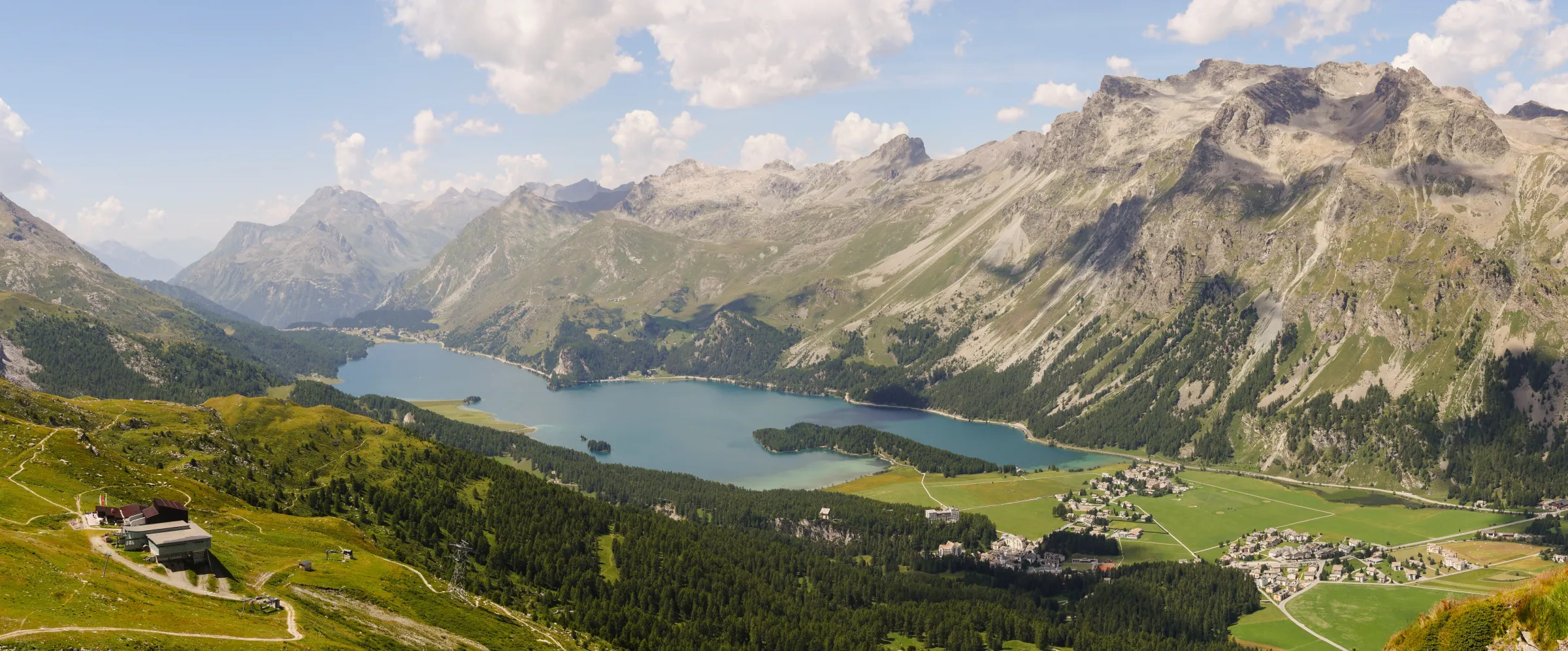
Having broken with Wagner, Nietzsche also resigned his Basel professorship. In search of relief from the migraines that plagued him throughout his life and of a quiet and solitary setting in which to deepen his thinking, he discovered the small village of Sils-Maria in the Engadine, at the foot of the Alps. Severed from the great cities and from the Wagnerian frenzy, this highland became, for him, the place in which to dismantle inherited values and build a new philosophy. In the clear air and silence of the Alps he conceived Thus Spoke Zarathustra (1883–85), and gradually moved toward the core of his thought: "eternal recurrence."
Nietzsche's philosophy cannot be summed up in a single sentence, but at its center is the stance of affirming and accepting this life, in this world, just as it is — whether good or bad. Christian values — values that ask one to endure the present by reference to a future world's reward, or that justify and aestheticize one's present condition by branding the strong and the rich as "evil" — Nietzsche rejected as a slave morality. He denounced Christian morality as a system that suppresses the individual, and condemned as decadent the music that culturally supports that system: music that depicts escape from this world, or that paints the suffering of the present as something to be "redeemed" at the end. This strain of Nietzsche's thought, in fact, connects in retrospect to the music criticism of Adorno later in the twentieth century — the figure famous for the proposition "after Auschwitz, to write poetry is barbaric." This article will not pursue that thread, but it is worth noting that Nietzsche had already, in his own time, become alert to the deep entanglement of music with society and ideology: to music's power to intoxicate and to make people look away from reality, and to the affinity between a popularized music and totalitarianism.
Wagner's music dramas became precisely the target of this critique. The intricately constructed acoustic apparatus that drew listeners into intoxication. The dramatic structure in which hardship and pain ultimately led to redemption. To Nietzsche, these were not devices that turned people toward the present world but, on the contrary, devices that turned them away from it, that made them dream of salvation in some other place.
Wagner, Schopenhauer, and Late Nineteenth-Century German Music
To grasp Nietzsche's musical critique properly, we have to spend a moment on the philosophical pillar that Wagner's music itself rested on, namely the philosophy of Arthur Schopenhauer (1788–1860).
In The World as Will and Representation (1819), Schopenhauer placed music in a uniquely privileged position among the arts. Music does not, in his account, imitate the phenomena of the world; rather, it expresses directly the "Will" that underlies the world — in other words, music alone is able to touch the essence of the world directly, going beyond the visible and the everyday.
This view of music was something Wagner encountered around 1854 and read deeply, incorporating it into the theoretical scaffolding of his music dramas. In Schopenhauer's vocabulary, Wagner's music dramas can be described as devices that temporarily quiet the listener's will and lift one into a higher domain. The motif of momentarily redeeming, through music, the people who live in a painful present world runs along the basement of Wagner's works themselves.
The young Nietzsche, in fact, was inside this same frame. In The Birth of Tragedy (1872), drawing on Schopenhauer's account of music, he praised Wagner's music dramas as a modern resurrection of Greek tragedy. When he later moved away from Wagner, what he was simultaneously trying to shake off was this very view of music that he himself had once shared so fervently. If music carries listeners off to "a higher domain" and promises "redemption," then that music robs people of the power to remain in the present world, and produces longing for somewhere else — that, to the late Nietzsche, was nothing other than decadence.
That said, Nietzsche's critique, from the mainstream perspective of German musical life at the time, tended to be treated as the extreme position of an eccentric philosopher. Especially in the symphony as a genre — the lineage that runs from Beethoven through Bruckner all the way to Mahler, Strauss's contemporary — the assumption that music ought to speak of "something beyond this world" remained strongly rooted.
Strauss the Musician: A Brief Biography
Richard Strauss (1864–1949) was a musician born into precisely this Germany. His father Franz Strauss was principal horn of the Munich Court Orchestra and took part in the premieres of many of Wagner's works, but he himself remained a conservative who was critical of Wagner to the end. Under his father's influence, the young Richard initially trained in the classical line of Mendelssohn, Schumann, and Brahms. His step into the "Wagnerian" camp came through Alexander Ritter, a violinist he met around the age of twenty. Ritter was a fervent Wagnerian who insisted to the young Strauss that the "music of the future" of Wagner and Liszt was the path forward.
Guided by Ritter into Wagnerism, the young Strauss rapidly changed his style. The series of tone poems written from his late twenties through his thirties — Macbeth (1886–87), Don Juan (1888), Death and Transfiguration (1889), Till Eulenspiegel's Merry Pranks (1894–95), Also sprach Zarathustra (1896), Don Quixote (1897), Ein Heldenleben (1898) — established Strauss as the standard-bearer of German music, as the "heir to Wagner." These works were the most sharply pointed continuation of the line of programmatic orchestral music opened by Wagner and Liszt.
Inheriting Wagner and Liszt, however, did not mean inheriting their entire worldview. The subjects Strauss chose drift, little by little, away from the mythological heroes and Christian redemption that Wagner preferred. The trickster Till from German folklore; the absurd, deranged country gentleman Don Quixote; and by the time we reach the hero of Ein Heldenleben, the figure depicted is not a Wagnerian mythical persona at all but a contemporary musician strongly suggestive of Strauss himself. Even when he set Nietzsche's book in Also sprach Zarathustra, Strauss made a point of saying that he had no intention of "philosophizing in tones." Stepping back from Wagnerian solemnity — from the idea of music as a vehicle for philosophy — was Strauss's position in this period.
An Alpine Symphony and Nietzsche: A Documented Influence, and a Disputed Depth
That An Alpine Symphony (1915) was composed under the strong influence of Nietzsche's thought is established almost beyond doubt by Strauss's own words. The most vivid testimony is the diary entry of 19 May 1911 — written the day after Gustav Mahler's death.
Gustav Mahler died on the 19th after a serious illness. The death of this striving, idealistic, energetic artist is a heavy loss. … The Jew Mahler could still attain elevation in Christianity. The hero Richard Wagner descended into it again, in his old age, under the influence of Schopenhauer. … I shall call my Alpensinfonie "the Antichrist": moral purification through one's own strength, liberation through work, worship of the eternal, glorious nature.
— Strauss's diary, 19 May 1911 (via Youmans 2000)
"Antichrist" is, of course, the title of one of Nietzsche's works, and the keywords — "moral purification through one's own strength," "liberation through work," "worship of nature" — are variations on vocabulary at the center of Nietzsche's thought.
There is, however, scholarly disagreement on how deeply Strauss actually understood Nietzsche. The long-dominant orthodox view has been that Strauss's grasp of Nietzsche was not particularly deep, and that — in both Zarathustra and An Alpine Symphony — his setting amounts to no more than a surface musicalization of Nietzschean keywords. The fact that Strauss is not recorded as a systematic philosophical reader of Nietzsche, and the fact that, when writing Zarathustra, he insisted he had no intention to "philosophize in tones," have been taken as supporting that view.
Against this, the musicologist Charles Youmans has argued that Strauss's reading of Nietzsche was far deeper, and far more consistent, than the orthodox view allows (Youmans 2000). On Youmans's account, Strauss had carried, from a young age, a discomfort with the foundation of Wagnerism — that is, with the conception of music as a device for touching, in a Schopenhauerian sense, "something beyond this world." The scene in his first opera Guntram (1893–94), in which the protagonist breaks his lyre, Youmans reads as Strauss's quiet declaration that "the project of mixing music with something beyond this world is over." This long-running concern, on Youmans's reading, runs in an unbroken line for the next twenty years all the way to Strauss's "Antichrist" remark about An Alpine Symphony.
So the depth of Strauss's Nietzsche reading is itself disputed. But even granting that Strauss understood Nietzsche deeply, whether he was actually trying to render that thought faithfully in music is yet another question, and not one on which we can really be definite. Strauss was a composer, not a philosopher, and what he was trying to do as a musician can be inferred only from the works he left behind.
Is An Alpine Symphony Nietzschean?
In An Alpine Symphony, Strauss commits himself to thoroughgoing tone painting. He divides the day of an Alpine climb into twenty-two scenes and depicts them in extreme detail. Sunrise. Entering the forest. The waterfall. The meadow. Losing the way. The glacier. The summit. The storm. Sunset. Night. Wind machine, thunder machine, cowbells — no expense is spared in marshalling effects. As outlined at the start of this article, each scene is named by a programmatic heading, and the listener can follow, score in hand and ear at the ready, exactly where they are on the mountain at any given moment. The piece pulls the listener's attention back from abstract "meaning" toward the concrete sound right in front of them: the running stream, the roaring waterfall, the cracking thunder. Rather than sending the listener off toward "something beyond this world," it is designed throughout to bring them face to face with the nature that is "here and now."
This strategy was not received warmly by the critics of the time. Reviews of the premiere included the gibe that this was "Kinomusik" — film music. The work was too descriptive, the critics charged, and lacked the spiritual elevation appropriate to the symphony as a genre. For listeners at the time, the symphony was still meant to speak of "something beyond this world," and Strauss's choice was, by deliberate intention, a provocation.
That said, whether An Alpine Symphony is in fact a Nietzschean work is not as simple a question as it might at first sound.
Take, for example, the circular structure of the work — beginning at night, passing through sunrise, walking through a day, weathering a storm, and returning at last to night. There is something here that resembles, at least in spirit, the "eternal recurrence" that Nietzsche is said to have conceived at the lakeside rock near Sils-Maria that later came to be called "Nietzsche's Rock." Everything returns again, in the same way. The end of a day is not a passage to a higher stage but a return to the very "night" from which tomorrow will start. The nested structure of time in An Alpine Symphony does indeed feel, at the level of form, somehow Nietzschean.
On the other hand, the moments in An Alpine Symphony that strike the listener most deeply — the fanfare at sunrise, the great sweep of music at the summit, the warm sunset at the close — clearly fall within the conventions of a Romantic gesture of pathos. The writing that carries the listener up into "awe and intoxication before nature" is continuous with the very Wagnerian exaltation that Strauss had been trying to leave behind. If one were going to set a properly Nietzschean Alpine climb to music, the summit should presumably be socked in by mist with no view at all, the wind should be loud and unpleasant, one's boots should rub, and the music should depict simply the act of "walking" through all of it. Strauss's Alps are very clearly not that kind of Alps.
Strauss's view of nature itself is probably not the same as Nietzsche's. He built an elegantly rustic villa in Garmisch-Partenkirchen, at the foot of the Bavarian Alps, and spent much of his life there. What that life contained is not the solitary, harsh, high-altitude reflection that Nietzsche was seeking at Sils-Maria, but ordered pastoral days with his family. The "nature" that Strauss wrote into his music looks less like the Nietzschean "solemn thing that grants no human comfort," and more like the gentler, friendlier nature that surrounded Strauss's own daily life.
In other words, An Alpine Symphony was conceived under the strong influence of Nietzsche, but the music that ended up being written is not at all unambiguously Nietzschean. The Romantic exaltation, the pastoral calm, the Wagnerian splendor of the giant ensemble — all of these are accepted into the piece and made to sound. One can criticize the result as "not Nietzschean," and one can read it as "Nietzsche's spirit digested in Strauss's own way." Both readings are, in a sense, correct.
How deeply Strauss read the philosopher Nietzsche is, in the end, something that cannot be settled with certainty. What can be said is this: Strauss accepted the vocabulary inherited from Wagner — the huge orchestral apparatus, the over-the-top sonic effects up to and including the wind machine — and the vocabulary inherited from Mahler — the symphony as a genre itself (although Strauss had said he "no longer enjoyed writing symphonies," he persisted with this work over sixteen years, by far the longest gestation of any of his orchestral pieces, and chose to label it not a "tone poem" but, deliberately, a "symphony") — and tried, with that same vocabulary, to write something quite different.
Sources
- Daniel Gregory Mason, "A Study of Strauss," The Musical Quarterly 2/2 (Apr. 1916), pp. 171–190
- Charles Youmans, "The Twentieth-Century Symphonies of Richard Strauss," The Musical Quarterly 84/2 (Summer 2000), pp. 238–258