

From Disaster to Triumph: Rachmaninoff's Symphony No. 2
Listen to this article
The Disaster
In 1897, Rachmaninoff premiered his Symphony No. 1 in D Minor, Op. 13 in St. Petersburg. It was a catastrophe.
What went wrong? Several factors collided. The conductor, Alexander Glazunov, was allegedly heavily intoxicated. Rehearsals were woefully inadequate—Glazunov was juggling other premieres and, reportedly dissatisfied with the symphony itself, prioritised other works. And there was the deep-seated rivalry between the Moscow and St. Petersburg schools. Rachmaninoff, seen as a representative of Moscow's progressive style, faced a hostile St. Petersburg establishment.
The premiere destroyed him.
The Glazunov Question
It's easy to cast Glazunov as the villain here. But the truth is more complicated.
Alexander Glazunov was a towering figure in Russian music—a composer of remarkable talent and a dedicated educator who shaped generations of musicians at the St. Petersburg Conservatory. Among his students was a young Dmitri Shostakovich, who later acknowledged Glazunov's extraordinary gifts and contributions to Russian music.
Yet Shostakovich also provided insight into Glazunov's drinking habits. He recalled how his father would provide alcohol to Glazunov upon his earnest request during the prohibition era, and mentioned that Glazunov was even known to drink during his lessons.
Was Glazunov drunk at the podium that night? We can't know for certain. But something clearly went very wrong.
The Recovery
Rachmaninoff was so devastated that he fell into a deep creative block. For years, he struggled to compose.
Eventually, he sought help from Dr. Nikolai Dahl, a physician who treated him with hypnotherapy and supportive counselling. The treatment worked. Rachmaninoff emerged from his darkness with renewed creative energy.
Shortly after returning from a summer trip to Crimea and Italy, he wrote letters expressing profound enthusiasm for composition and a firm resolve to immerse himself in his work. His mind overflowed with musical ideas—the Suite No. 2 for Two Pianos, Op. 17, the Cello Sonata in G Minor, Op. 19, and most importantly, his Piano Concerto No. 2 in C Minor, Op. 18 all emerged in rapid succession during this fertile period.
The Piano Concerto No. 2 was performed in 1900 even before the first movement was completed—and it received overwhelming support from the very beginning. The complete premiere took place in Moscow in 1901, with Rachmaninoff himself as soloist.
As a token of his deep gratitude, Rachmaninoff dedicated this concerto to Dr. Dahl. The work's subsequent global success needs no introduction—it remains one of the most beloved piano concertos ever written.
11 Years Later: The Return
In 1908, Rachmaninoff was ready to face his demons.
He had written his Symphony No. 2 in E Minor, Op. 27 while his family was staying in Germany to escape political unrest in Russia, completing it upon his return home.
For the premiere, he made a deliberate choice: St. Petersburg. The very city where his first symphony had been destroyed eleven years earlier.
This time, he would conduct it himself.
The performance was a triumph. Coming more than a decade after his first symphonic effort, Symphony No. 2 is filled with Rachmaninoff's signature lyrical beauty and ingeniously crafted passages.
And the third movement? That soaring melody is regarded as one of the finest in all of Rachmaninoff's works. If it reminds you of the famous Variation 18 from his Rhapsody on a Theme of Paganini, Op. 43—that tender, sweeping romanticism—you're hearing the same lyrical heart. Pure, singing, achingly beautiful. The sound of a composer healed.
A Footnote
As for Symphony No. 1—Rachmaninoff withdrew the score after the disastrous premiere, and it was thought to be lost. It wasn't until after World War II that the orchestral parts were discovered by chance in the Leningrad Conservatory library. The symphony finally returned to the stage in Moscow in 1945, two years after Rachmaninoff's death. He never heard it performed again.
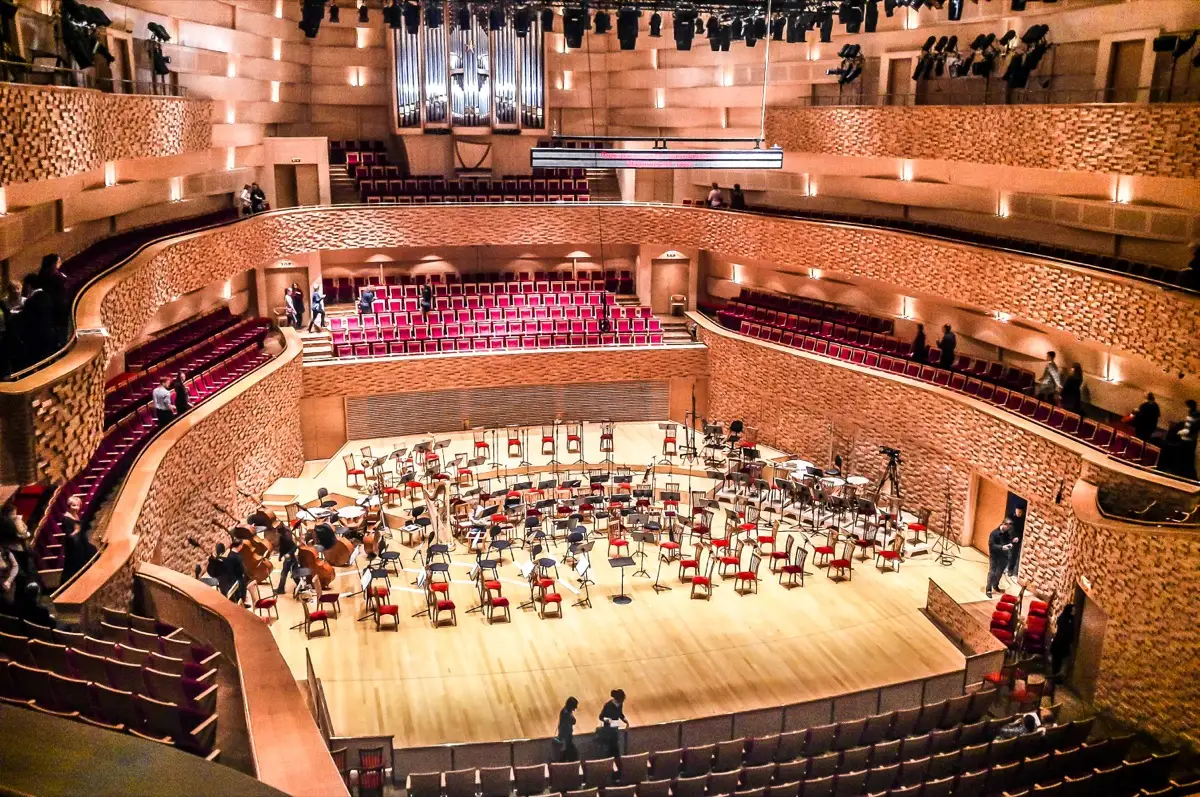
Cover photo: The Mariinsky Theatre in St. Petersburg, where Rachmaninoff premiered his Symphony No. 2 in 1908.
Source: guidio (Based on Harrison, M. "Rachmaninoff: Life, Works, Recordings", 2005)