

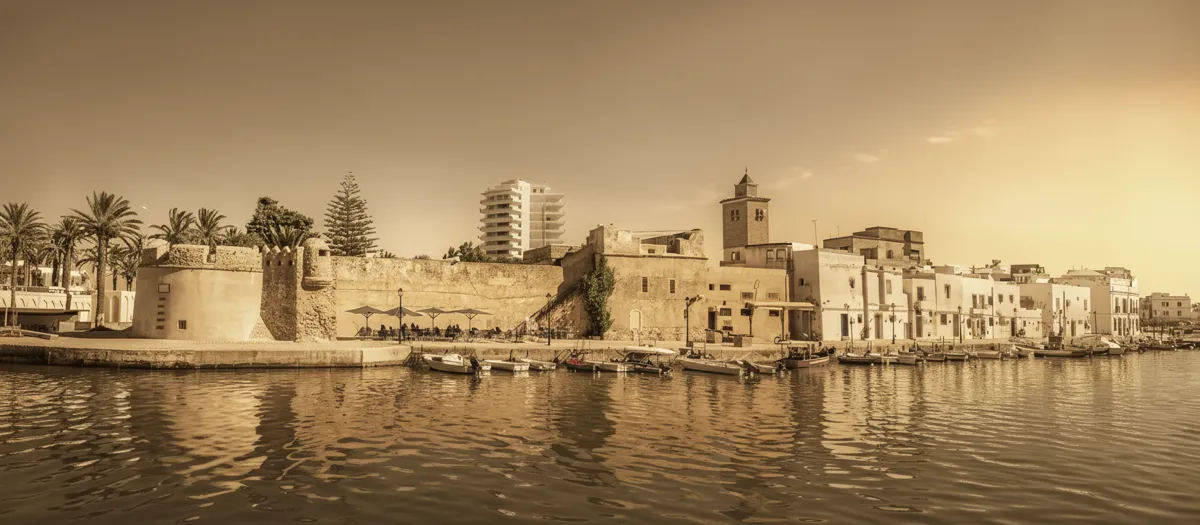
Egyptian or Tunisian? Saint-Saëns' Piano Concerto No. 5
Listen to this article
Camille Saint-Saëns—you might know him for "The Swan" from Carnival of the Animals, or that grand finale from his Organ Symphony.
His Piano Concerto No. 5 carries the nickname "Egyptian" Concerto. Why? Because he wrote it in Egypt—in the winter of 1896, staying in Luxor. But here's the interesting part: musically, it's not Egyptian. It's Tunisian.
A Traveler's Composer
Saint-Saëns loved North Africa. He traveled there repeatedly throughout the 1880s and 1890s—Tunisia, Algeria, Egypt—absorbing the music, the rhythms, the atmosphere.
In 1891, he composed Africa, Op. 89 (Fantasy for piano and orchestra), a work that went deep into Tunisian musical traditions. The slow movement accurately reproduced the 19th-century Tunisian national anthem (Hymn to the Bey). The opening used the Rasd al-Dhil mode, and throughout the piece, Saint-Saëns employed rhythmic ostinatos resembling the Tunisian Ghayta, authentic modes like Nawa and Asba Ayn, and the Maghreb region's characteristic octave doubling technique.
This wasn't superficial exoticism. The late 19th century was the age of Orientalism in European music—composers fascinated by "exotic" sounds, often borrowing surface-level gestures to evoke atmospheric "otherness." Think Bizet's Carmen, Rimsky-Korsakov's Scheherazade.
But Saint-Saëns went deeper. He didn't just visit once for inspiration—he kept going back, studying the music, learning the modes, absorbing the rhythms. This was genuine engagement, not tourism.
He performed Africa himself at Cambridge University in 1893 when receiving an honorary doctorate. Tchaikovsky was there too, receiving his own. The two composers spent time together, exchanging ideas.
Tragically, Tchaikovsky died later that year, shortly after completing his Symphony No. 6 "Pathétique."
Three Years Later: The Egyptian Concerto
In 1896, Saint-Saëns was in Luxor, Egypt. That winter, he composed his Piano Concerto No. 5.
The location gave it the nickname "Egyptian." But when he sat down to write, what came out wasn't Egyptian music—it was the musical memories from Tunisia and Algeria he'd been carrying with him.
The concerto is deeply rooted in Tunisian and Algerian traditions. The first movement uses a Tunisian rhythm called Khatim. The second movement incorporates authentic Tunisian modes like Mhayar Sikah, Mezmoum, and Rasd al-Dhil. Even the way themes are played in octaves reflects a specific North African piano tradition.
So the nickname is geographically correct—he wrote it in Egypt—but musically misleading.
The Music
The first movement opens gently. The second movement is where Tunisia really shows up—the rhythms shift, the modes feel unfamiliar to European ears.
But don't let the exotic colors intimidate you. The first movement's opening theme, passages in the second movement, and the third movement's main theme are all wonderfully catchy and accessible—perfect entry points for classical newcomers.
It's called "Egyptian" because of where it was written. But what you're hearing? That's Tunisia.
Still Going
Saint-Saëns kept traveling, kept performing, kept composing—well into his 80s. He eventually died at 86 in 1921 in Algeria, still on the road.
And that's the beauty of it—Saint-Saëns carried the music of one place into another, letting it live in his work long after he'd left.
Source: Blagui, Ilyes. "The impact of Saint-Saëns' travels in Tunisia on his creative work." GSJ 11, no. 5 (2023): 640-651.